






Differences Between AHU and PAU: How To Select The Right Equipment For Your Facility
Contents/ Mục Lục
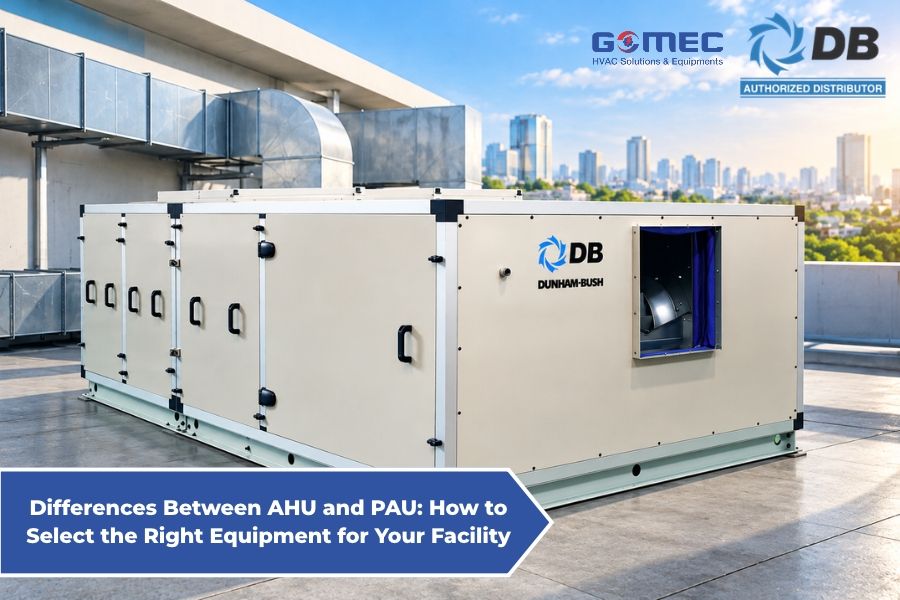
In centralized air conditioning systems, AHU (Air Handling Units) and PAU (Primary Air Units) play crucial roles in air conditioning, processing, and distribution. However, many industry stakeholders still lack a clear understanding of the functional distinctions between these two types of equipment. Each unit serves specific operational functions and target applications. Selecting the correct equipment ensures optimal HVAC system performance, energy efficiency, and indoor air quality (IAQ) compliance. The following article details the features, functions, and selection guidelines for AHU and PAU tailored to various building requirements.
What are AHU and PAU in an HVAC system?
Both AHU and PAU are air handling equipment integrated into HVAC systems to condition supply air parameters (temperature, humidity, cleanliness) prior to distribution to conditioned spaces. However, each unit is engineered for distinct operational duties: AHU primarily process and recirculate indoor air, whereas PAU focus specifically on pre-treating 100% outdoor fresh air (OA).
AHU – Air handling unit
An AHU (Air Handling Unit) is a centralized air conditioning component typically comprising supply/return fans, air filtration sections, heat exchange coils (chilled water, hot water, or direct expansion – DX), and control assemblies. Depending on system design, an AHU provides cooling, heating, dehumidification, and particulate filtration. Conditioned air is conveyed through supply ductwork to target zones. AHU are widely deployed in commercial buildings, hotels, shopping malls, healthcare facilities, and manufacturing plants.
PAU – Primary air unit
A PAU (Primary Air Unit / Pre-treated Air Unit) is specialized equipment designed to handle 100% fresh outdoor air before supplying it into a facility. Ambient outdoor air exhibits varying dry-bulb temperatures, relative humidity levels, and airborne contaminant concentrations. The PAU filters, cools, heats, or dehumidifies fresh air to design setpoints. Once treated, the fresh primary air is delivered directly to target zones or fed into downstream AHU/FCU (Fan Coil Units). PAU are essential in facilities with stringent ventilation and IAQ standards.
Key differences between AHU and PAU
Although both units process air, AHU and PAU differ significantly in air source, functional objective, and operating principles. These distinctions directly impact HVAC system design strategy.
Air source discrepancy
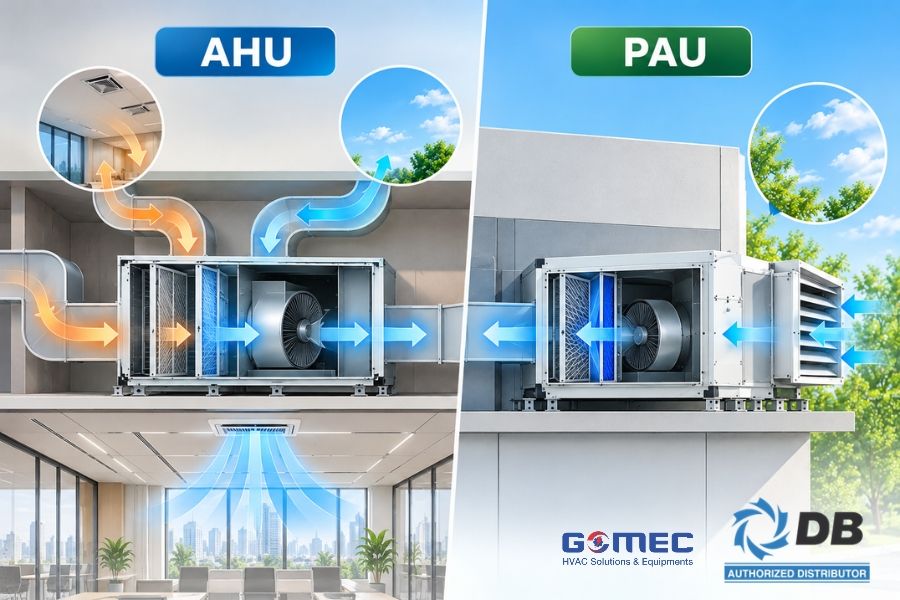
AHU: Primarily processes return air (RA) from conditioned spaces, or a mixed air stream combining return air with a fraction of outdoor fresh air. This recirculation maintains required space enthalpy and thermal comfort efficiently.
PAU: Exclusively handles 100% fresh outdoor air (OA), conditioning outdoor ambient air prior to introduction into the building envelope.
Function and operational objective
AHU: Focuses on maintaining internal space temperature, relative humidity, and air circulation across conditioned zones.
PAU: Prioritizes outdoor air treatment to meet code-mandated ventilation rates (e.g., ASHRAE 62.1 standards). By handling the sensible and latent loads of raw outdoor air, a PAU significantly reduces the thermal load on downstream AHU or FCU, improving overall plant efficiency.
Mechanical room location and layout
AHU: Typically housed in dedicated mechanical rooms (AHU rooms) strategically located near conditioned zones to minimize ductwork static pressure losses.
PAU: Located in plant rooms adjacent to outdoor air intake louvers or mechanical roofs to easily capture fresh ambient air. Both units require adequate service access for coil cleaning, filter replacement, and fan maintenance.
Applications of AHU and PAU in Building Projects
Depending on facility design, systems may utilize standalone AHU, dedicated PAU, or an integrated primary-secondary ventilation scheme.
Hotels and commercial complexes
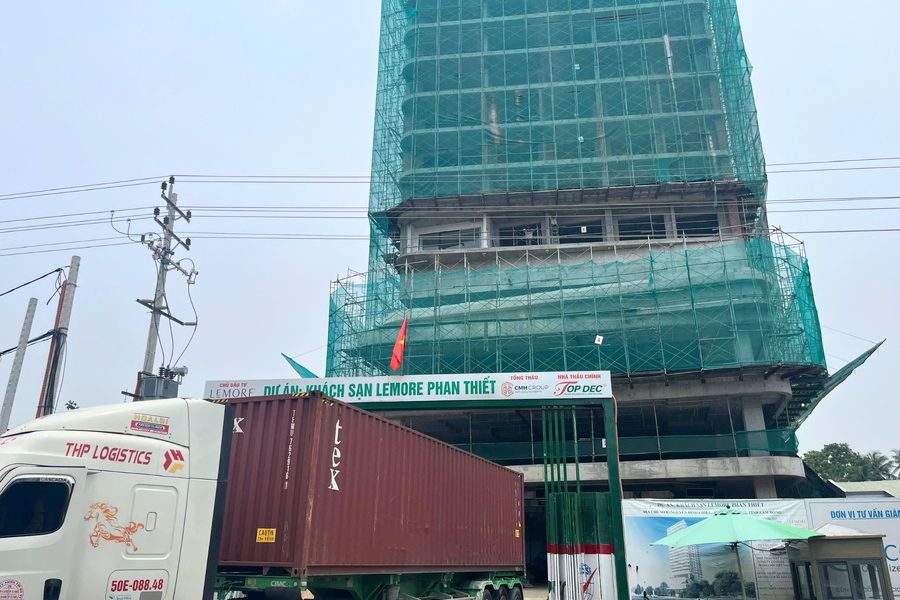
Large-scale commercial developments feature variable occupant densities and zoning demands. AHU handle space cooling and heating for large open areas (ballrooms, lobbies, atriums), while PAU deliver pre-treated fresh air to guest rooms and tenant spaces. This integration maintains occupant comfort while optimizing VAV/CAV airflow control.
Hospitals and healthcare facilities
Healthcare spaces demand strict control over particulate contamination, pressurization, and humidity. AHU equipped with high-efficiency filters (e.g., HEPA) regulate cleanroom conditions, while PAU supply pre-conditioned fresh air to prevent contamination cross-flow and maintain positive/negative pressure cascades in isolation rooms.
Industrial plants and clean manufacturing
In industrial and high-tech manufacturing, AHU maintain precise ambient temperature and relative humidity parameters critical to production processes. PAU supply makeup air to offset local exhaust systems. Multi-stage filtration sections are configured based on ISO cleanroom classifications or specific process requirements.
How to select the right AHU and PAU for your project
Selecting appropriate air handling equipment requires a comprehensive thermodynamic evaluation rather than choosing solely based on physical dimensions or nominal capacity. Key engineering parameters include design airflow (CFM or $m^3/h$), total cooling/heating capacity (kW or Tons of Refrigeration), static pressure drop, sensible heat ratio (SHR), and ambient operating conditions.
Identify air processing requirements
If the priority is space temperature control and air recirculation across large zones, select an AHU.
If the project demands substantial dedicated outdoor air conditioning to handle high latent ventilation loads, integrate a PAU.
For optimal energy performance in modern facilities, a combined PAU + FCU/AHU system is highly recommended.
Airflow rate and thermal capacity sizing
Undersized equipment leads to inadequate sensible/latent load performance and indoor discomfort. Oversized units result in excessive capital expenditure (CAPEX), short-cycling, and elevated operating costs (OPEX). Engineers must execute detailed cooling/heating load calculations, accounting for external duct static losses and coil pressure drops.
Operational efficiency and controls integration
Prioritize equipment featuring high-efficiency EC/plug fans, variable frequency drives (VFDs), and high-effectiveness heat recovery wheels or run-around coils. Integration with Building Management Systems (BMS) via BACnet or Modbus protocols allows dynamic airflow modulation and demand-controlled ventilation (DCV).
Gomec Vietnam: Authorized Dunham-Bush AHU and PAU solutions provider
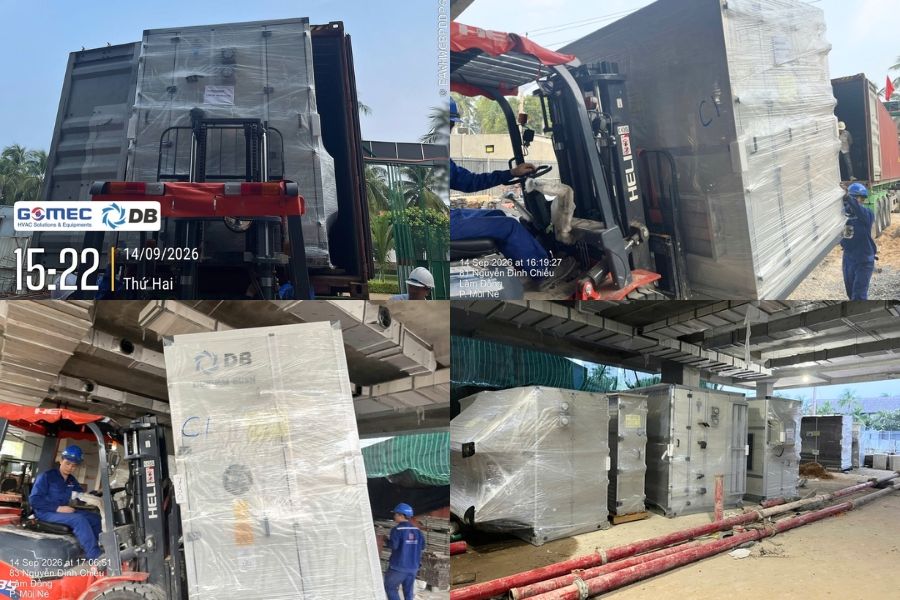
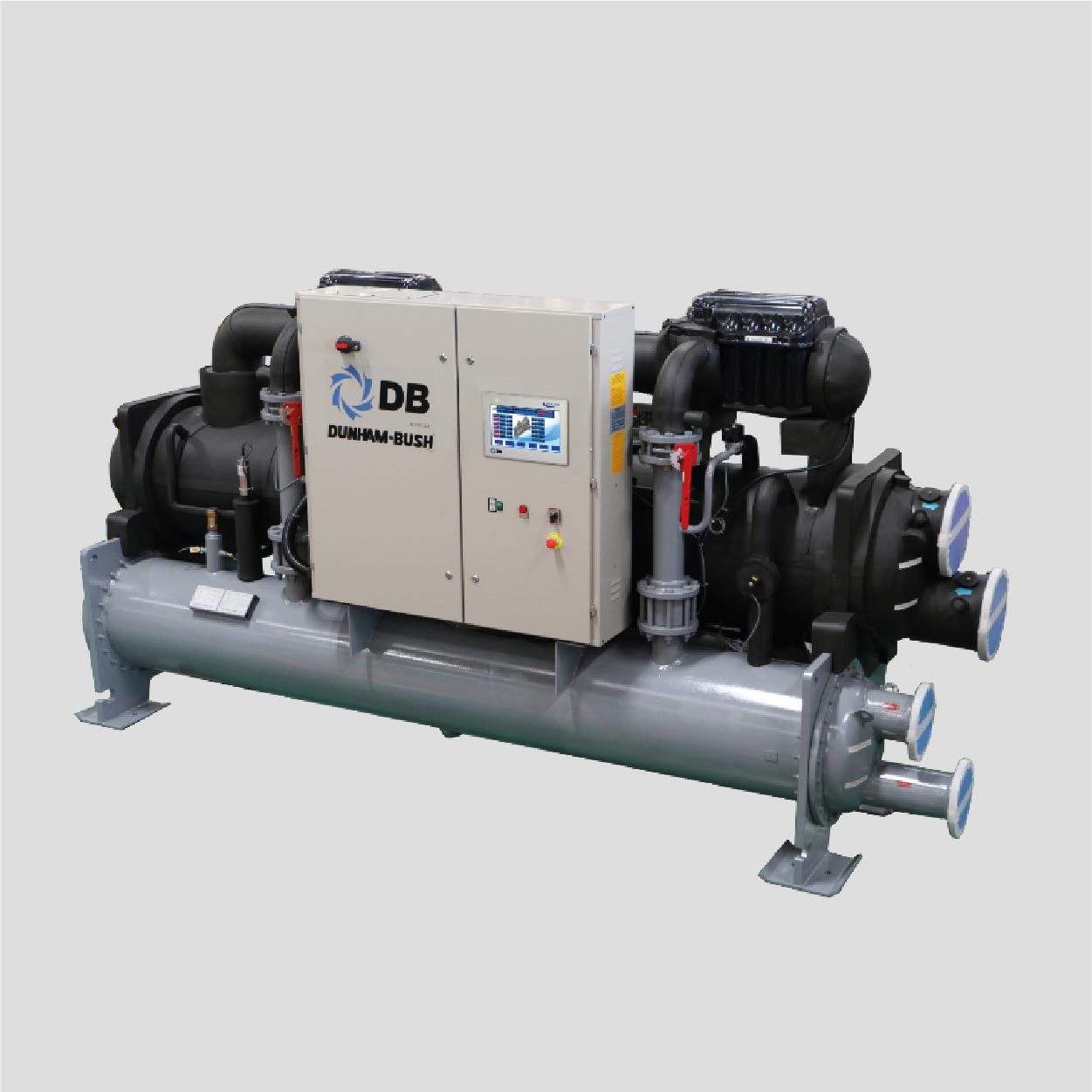
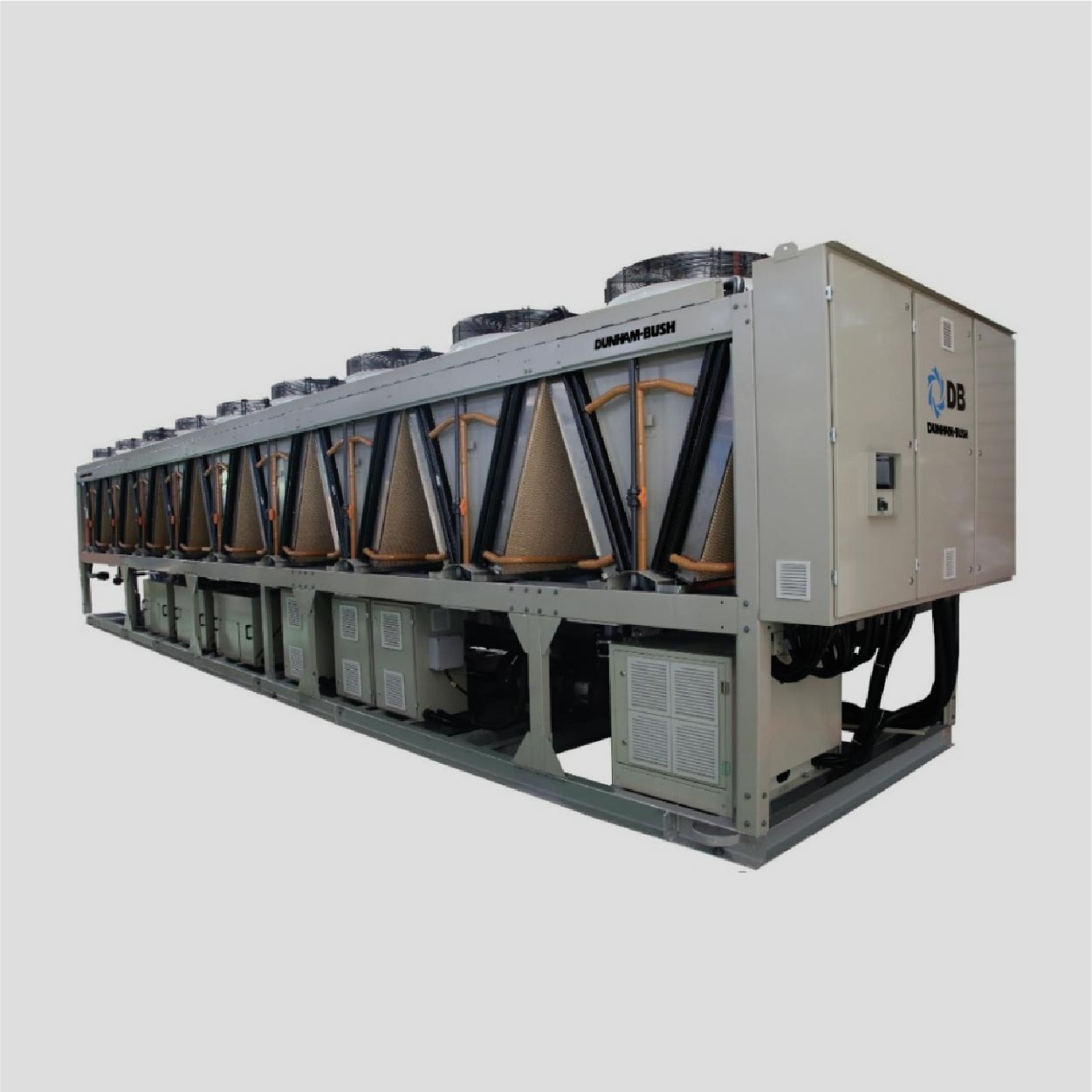
Partnering with established HVAC manufacturers is critical to project performance. Dunham-Bush offers engineered air handling and central chiller solutions across commercial, medical, and industrial sectors.
Gomec Vietnam supplies authentic Dunham-Bush AHU and PAU, delivering turnkey technical support, equipment selection, and engineering advisory services tailored to project specifications.
Versatile Dunham-Bush AHU and PAU product line
Dunham-Bush air handling units are configured to accommodate wide airflow ranges, coil configurations (chilled water / DX), and specialized filtration modules (Pre-filter, Bag filter, HEPA). Their modular panel design with thermal break frames ensures low air leakage and reduced thermal bridging.
Engineering support and selection services
Gomec Vietnam’s engineering team assists clients throughout the design phase, verifying thermal capacity, air face velocity, fan static pressure, and spatial constraints to recommend the most cost-effective AHU/PAU selection.
Conclusion
While both AHU and PAU are vital components in modern central HVAC systems, they serve distinct operational objectives. AHU manage internal space recirculation and thermal conditioning, whereas PAU handle outdoor fresh air pre-treatment and ventilation loads. Proper equipment selection relies on detailed thermal load profiling, ventilation standards, and system design criteria.
For genuine Dunham-Bush AHU/PAU equipment and specialized technical consultation in Vietnam, contact Gomec Vietnam to optimize your facility’s air treatment strategy.



Related Post

HVAC System Maintenance for Stable Performance and Long-Term Operation


Principle of Plate Heat Exchangers in Industrial Applications

Gomec Vietnam Officially Joins the Business Committee of the Vietnam Society of Refrigeration and Air-Conditioning Engineers

Differences Between AHU and PAU: How To Select The Right Equipment For Your Facility