








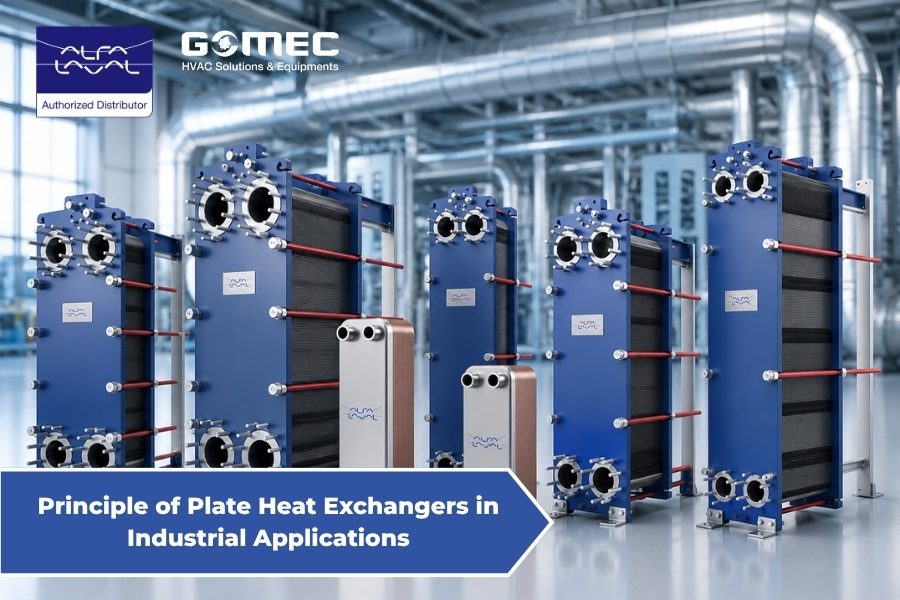
Principle of Plate Heat Exchangers in Industrial Applications
Contents/ Mục Lục
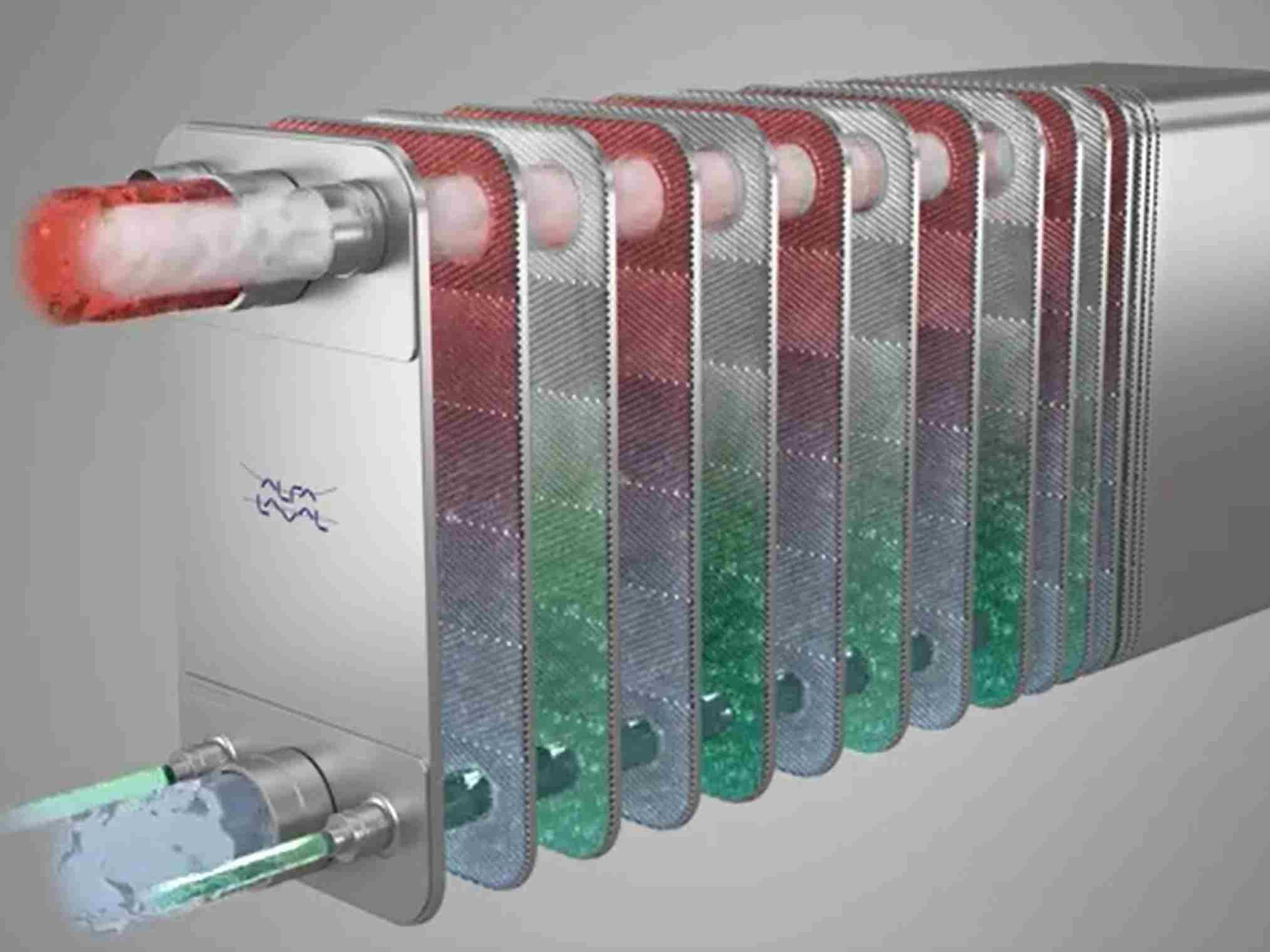
The operating principle of a plate heat exchanger is based on indirect heat transfer between two fluid streams. The two fluids flow through separate channels without coming into direct contact. Heat is transferred through the surfaces of thin metal plates. This design provides a large heat transfer area within a compact space. As a result, the equipment can meet various heating and cooling requirements. Plate heat exchangers are widely used in HVAC systems and many industrial applications. For projects requiring high efficiency, Alfa Laval is one of the widely used brands. Gomec provides suitable equipment solutions based on the technical requirements of each system.
How Does a Plate Heat Exchanger Work?
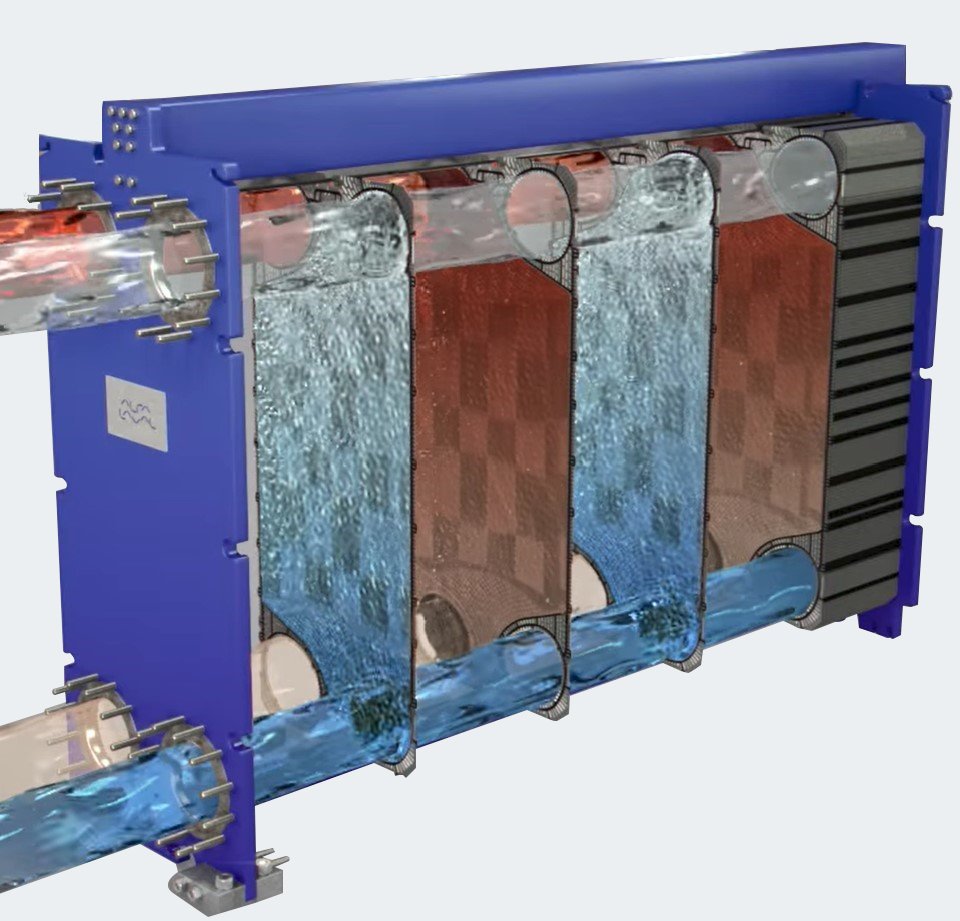
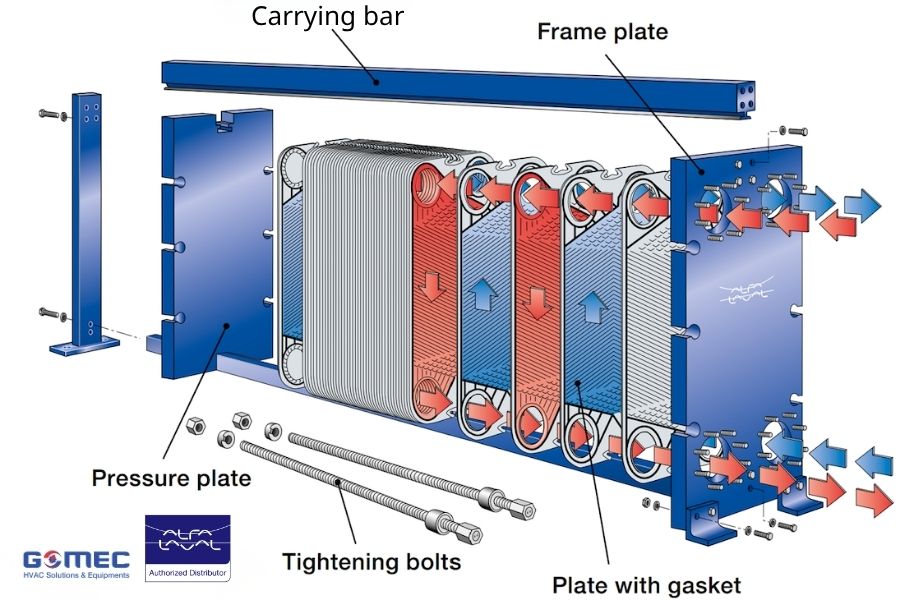
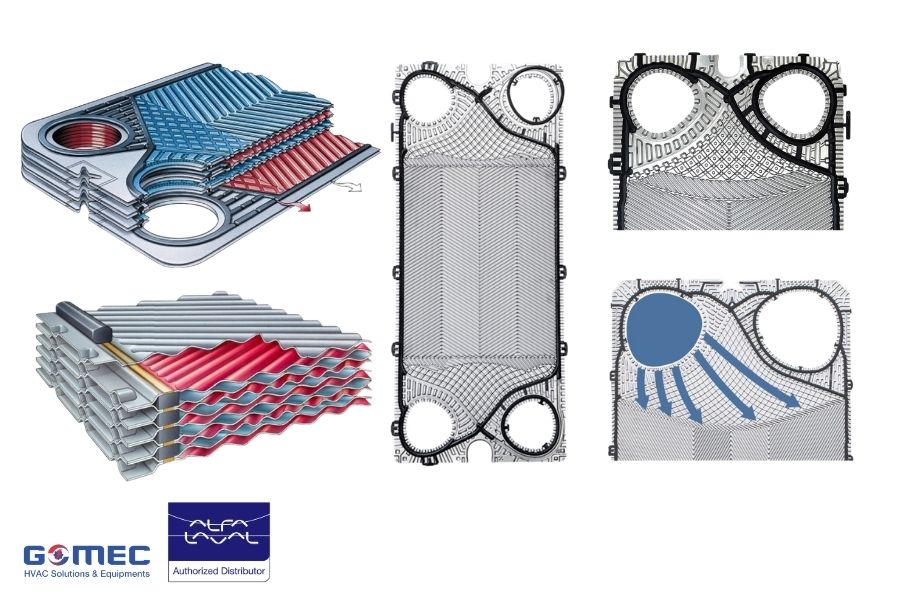
The equipment uses multiple metal plates assembled closely together. These plates create separate flow channels for each fluid stream. Heat transfer occurs continuously as the two fluids pass through the equipment.
Plate Heat Exchanger Construction
A plate heat exchanger consists of multiple metal plates with specially corrugated patterns. Gaskets are arranged around the edges of the plates to separate the fluid streams. A frame holds the entire plate pack securely in place during operation.
Heat Transfer Through Metal Plates
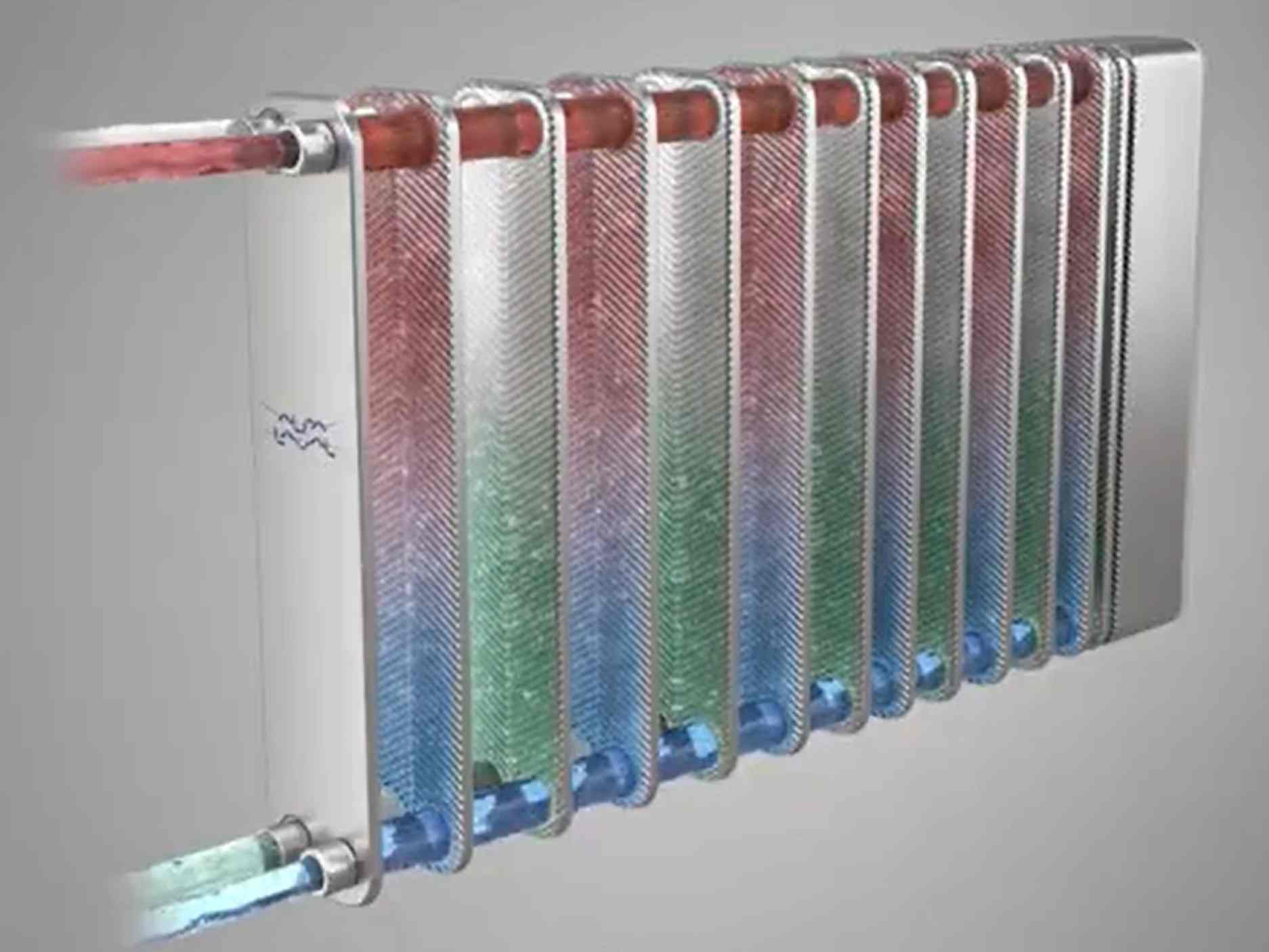
A hot fluid flows through one side of the plate. A cold fluid flows through the adjacent channel. Heat is transferred through the metal plate from the hot fluid to the cold fluid.
Counter-Current Flow in Heat Exchangers
Many heat exchangers use counter-current flow to improve heat transfer efficiency. The two fluids move in opposite directions through the channels. This arrangement helps maintain a more favorable temperature difference.
>> Read more: Modern HVAC Solutions Supporting Green Buildings
Factors Affecting Heat Transfer Performance
Performance does not depend solely on the equipment design. Operating conditions also directly affect heat transfer capability. Selecting the correct specifications helps the system operate more consistently.
Heat Transfer Surface Area of a Plate Heat Exchanger
A suitable heat transfer area allows for more effective heat exchange. The number and size of plates need to be calculated according to the heat load. Proper design helps prevent insufficient capacity or unnecessary equipment size.
Fluid Flow Rate and Velocity
Flow rate directly affects the heat transfer process inside the equipment. An appropriate flow helps improve heat transfer across the plate surfaces. Excessively low or high flow rates can reduce operating efficiency.
Temperature Difference Between Two Fluid Streams
The temperature difference provides the driving force for heat transfer. When operating temperatures change, the equipment capacity also changes. Therefore, input conditions need to be accurately determined before selecting the equipment.
Applications of Plate Heat Exchangers
The equipment offers high efficiency and flexible installation options. This is why plate heat exchangers are used in many engineering systems. Each application may require a different configuration and material.
Plate Heat Exchangers in HVAC Systems
In HVAC systems, the equipment can be used to transfer heat between water circuits. It supports cooling or heating of fluids within the system. A suitable solution helps maintain stable temperatures while saving installation space.
Equipment and Process Cooling
Many industrial plants use heat exchangers to cool water, oil, or process fluids. The heat transfer process takes place quickly and continuously. The equipment can be selected based on the specific heat load and operating conditions.
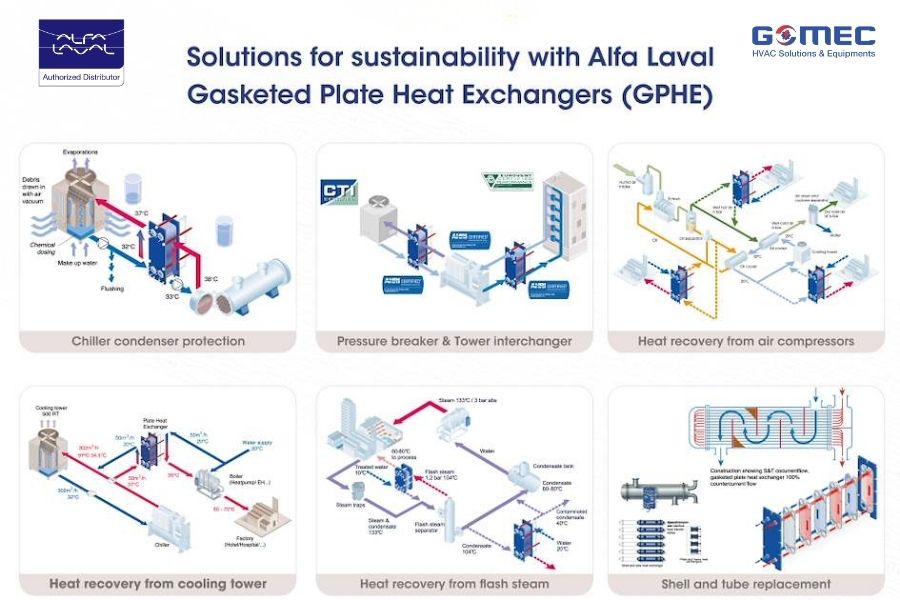
Heat Recovery from Industrial Systems
Waste heat can be recovered and reused in another process. A plate heat exchanger transfers this heat to a fluid that requires heating. This solution helps reduce energy consumption and improve operating efficiency.
Selecting the Right Heat Exchanger
Equipment should not be selected based solely on its rated capacity. Fluid properties, temperature, and pressure also need to be considered. Accurate calculations help ensure efficient operation over the long term.
Plate Heat Exchanger Capacity
Heat load is an important basis for determining equipment size. The capacity should meet both normal operating conditions and actual system requirements. Proper calculation helps avoid insufficient or excessive capacity.
Suitable Plate Material and Gasket Type
The plate material needs to be compatible with the properties of the fluid. Gaskets must also withstand the system’s temperature and chemical conditions. Selecting the right materials helps minimize corrosion and extend equipment service life.
Operating Pressure and Temperature
Pressure and temperature directly affect the equipment’s operating capability. These parameters should be checked before selecting a suitable model. Actual operating conditions also determine the appropriate plate and gasket configuration.
>> Read more: Tips for Maintaining Stable Heat Transfer Performance Over Time
Alfa Laval Plate Heat Exchanger Solutions
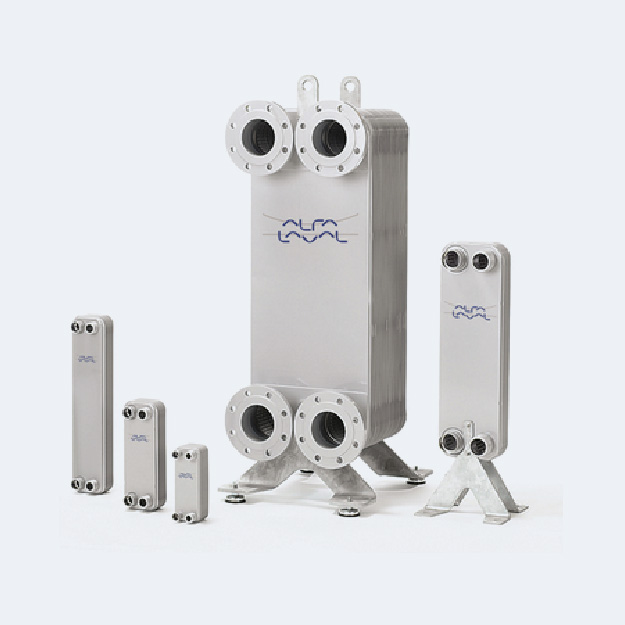
Alfa Laval develops a wide range of heat exchangers for HVAC and industrial applications. These solutions can be configured according to capacity and fluid requirements. Selecting the right equipment helps optimize the performance of the entire system.
Alfa Laval Heat Exchangers for HVAC
Alfa Laval equipment can be used in various central air conditioning systems. The heat exchanger supports heat transfer between water circuits and fluids. The equipment configuration should be selected based on the technical specifications of each project.
Alfa Laval GPHE for Industrial Applications
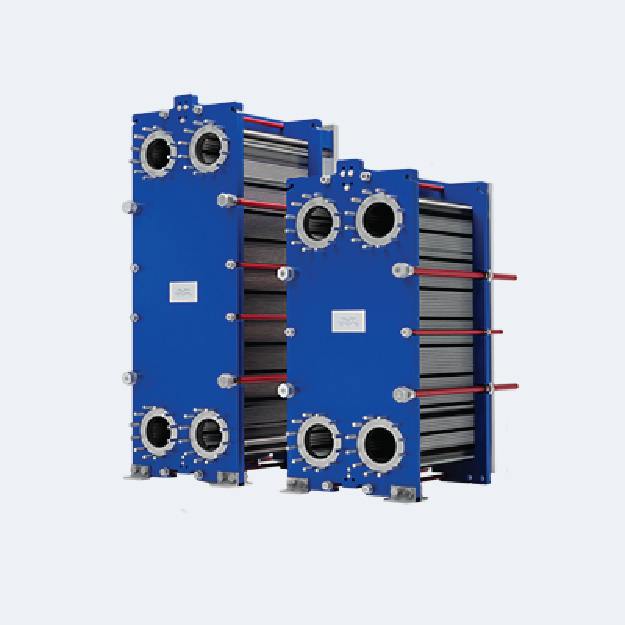
GPHE is a type of gasketed plate heat exchanger designed for convenient disassembly and cleaning. This design is suitable for many applications requiring regular maintenance. The equipment can be configured according to temperature, pressure, and flow rate requirements.
Equipment Selection Based on Project Requirements
Each project has different operating conditions and heat loads. Therefore, equipment should be selected based on actual technical data. Proper consultation from the early design stage helps minimize changes and unexpected issues during implementation.
Plate Heat Exchanger Maintenance
Proper maintenance helps maintain the equipment’s heat transfer capability. Issues such as fouling or damaged gaskets can reduce performance. Regular inspections help identify abnormal conditions at an early stage.
Cleaning Heat Transfer Surfaces
Fouling can build up on plate surfaces after prolonged operation. Deposits increase thermal resistance and reduce heat transfer efficiency. Cleaning should be performed according to the actual condition of the equipment.
Checking Gaskets and Plate Condition
Gaskets should be inspected for signs of aging or deformation. The plates should also be checked whenever the equipment is opened. Early detection helps minimize the risk of leakage during operation.
Monitoring Performance After Maintenance
Operating parameters should be checked again after cleaning. Temperature and pressure differences help evaluate the equipment condition. This data also supports the development of future maintenance schedules.
Conclusion
Understanding the operating principle of a plate heat exchanger helps businesses select and operate equipment more effectively. A suitable design can improve heat transfer performance while optimizing installation space. However, each system needs to be calculated based on actual operating conditions. For HVAC and industrial projects, selecting the right equipment from the beginning is essential. Gomec can provide consultation on Alfa Laval heat exchanger solutions according to the technical requirements of each project. Businesses can provide heat load, fluid, and operating condition data to receive recommendations for a suitable configuration.



Related Post

Heat Recovery Solutions Help Businesses Achieve Sustainable Operations


How to Maintain Stable Heat Transfer Efficiency Over Time

Key Criteria for Selecting the Right Dunham-Bush Chillers for Your Project

HVAC System Maintenance for Stable Performance and Long-Term Operation