






Understanding Water Cooled Chiller System from A to Z
Contents/ Mục Lục
- Overview of water cooled chiller system in modern infrastructure
- Component breakdown of a water cooled chiller system
- Working principle of water cooled chiller system
- Cutting-edge technologies from Dunham-Bush (USA)
- Key criteria for designing and selecting an efficient water cooled chiller system
- Gomec Vietnam – Authorized distributor of authentic Dunham-Bush equipment
- Conclusion
In the challenge of balancing massive cooling performance with the pressure to optimize energy costs in modern buildings, selecting the central infrastructure plays a decisive role in the survival of the entire MEP system. Far beyond mere large-scale refrigeration equipment, next-generation water-cooled chiller technologies are redefining operational standards for commercial buildings and industrial plants. Let’s explore in detail the water cooled chiller system – the golden key to boosting business efficiency and driving sustainable value.
Overview of water cooled chiller system in modern infrastructure
What is a water cooled chiller?
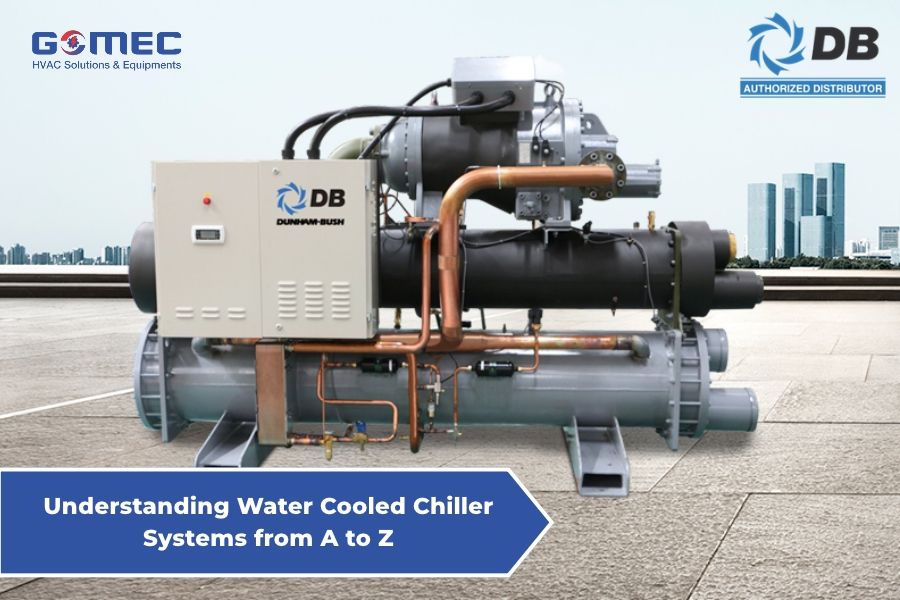
A water-cooled chiller is an industrial refrigeration equipment that uses water as a heat transfer medium through a piping system. Thermal energy from the building’s cooling load is absorbed via the evaporator and subsequently rejected into the ambient environment through a cooling tower paired with a condenser.
Key advantages of water cooled chiller system
Compared to air-cooled chillers, water-cooled chiller systems offer several superior technical advantages:
High Energy Efficiency (High COP): The condensing temperature of water is stable and lower than that of air, enabling the compressor to operate with lower lift and significantly save electrical power during continuous operation.
Large Cooling Capacity: Perfect for large-scale facilities, such as high-rise office buildings, 5-star hotels, shopping malls, international hospitals, and heavy manufacturing plants (textile dyeing, electronics, pharmaceuticals).
High Durability and Long Lifespan: The equipment is typically installed in an indoor mechanical plant room, protecting it from direct harsh weather conditions.
Component breakdown of a water cooled chiller system
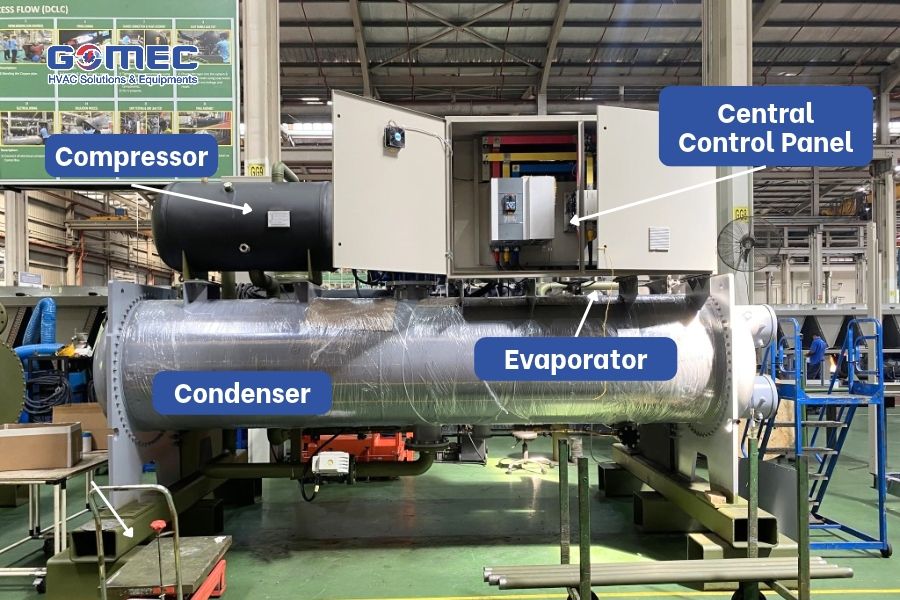
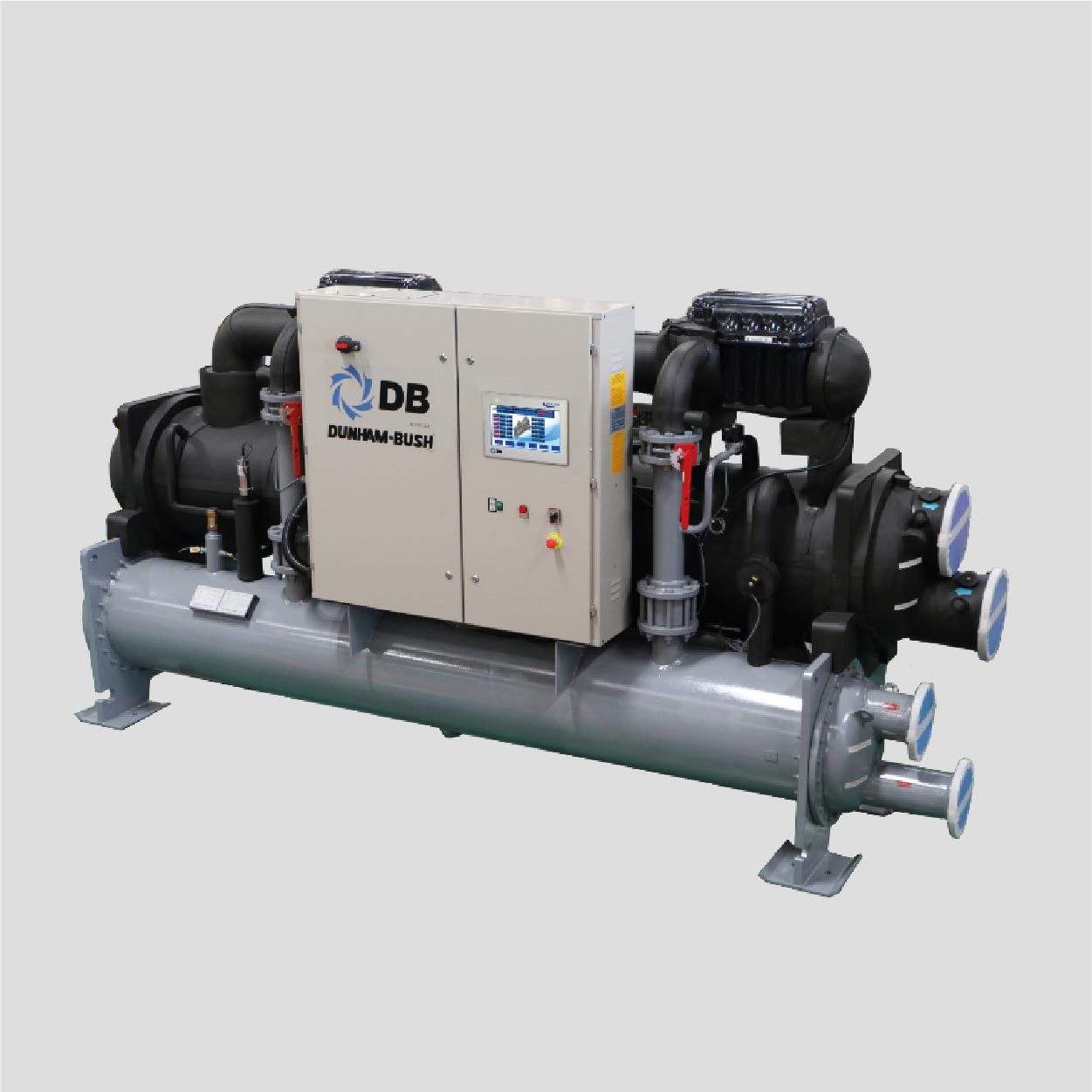
A complete standard water-cooled chiller package comprises 4 main thermodynamic cycle components along with a control system:
Compressor: The primary electrical power consumer, responsible for drawing low-pressure refrigerant gas from the evaporator and compressing it to high pressure and high temperature before discharging it to the condenser.
Common compressor types include: Screw, Centrifugal, or Magnetic Bearing.
- Condenser (Shell & Tube Heat Exchanger): Typically a horizontal shell-and-tube type. High-temperature refrigerant gas flows on the shell side, while water from the cooling tower flows inside the tubes to absorb heat and condense the refrigerant gas into liquid form.
Expansion Valve (Metering Device): Reduces the pressure and temperature of the refrigerant from a high-pressure liquid state down to a low-pressure liquid-vapor mixture before it enters the evaporator.
Evaporator (Chilled Water Barrel): Shell-and-tube type. The refrigerant boils and evaporates on the shell side, absorbing heat from process water flowing inside the tubes to produce chilled water (6°C – 7°C) supplied to AHUs/FCUs.
Central Control Panel: Integrates intelligent microprocessors to monitor flow rates, pressures, and temperatures, providing safety protection and interfacing with the Building Management System (BMS).
>> Read more: Water-Cooled Chiller – Operation and Applications
Working principle of water cooled chiller system
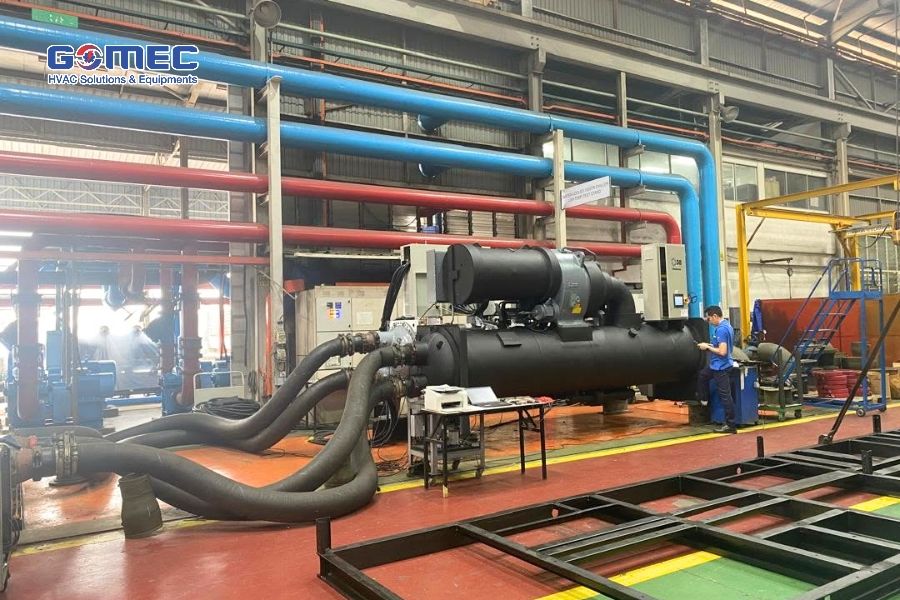
A water-cooled chiller system operates on a closed vapor-compression refrigeration cycle consisting of 4 sequential steps:
Step 1 (Compression Process): The compressor draws low-pressure vapor refrigerant from the evaporator, compresses it into high-pressure, high-temperature superheated vapor, and discharges it to the condenser.
Step 2 (Condensation Process): In the condenser, the refrigerant vapor transfers heat to the circulating cooling water coming from the Cooling Tower. The refrigerant rejects heat and condenses into a high-pressure liquid. After absorbing heat, the cooling water is pumped to the cooling tower to reject heat into the ambient air.
Step 3 (Expansion Process): High-pressure liquid refrigerant passes through the expansion valve. The sudden pressure drop causes a sharp decline in refrigerant temperature.
Step 4 (Evaporation Process – Water Chilling): Low-temperature refrigerant enters the evaporator and absorbs thermal energy from the return water coming back from the building (typically at 12°C). The water is chilled down to 7°C and pumped out to cool the building. The refrigerant absorbs heat, evaporates completely, and is drawn back into the compressor to repeat the cycle.
Cutting-edge technologies from Dunham-Bush (USA)
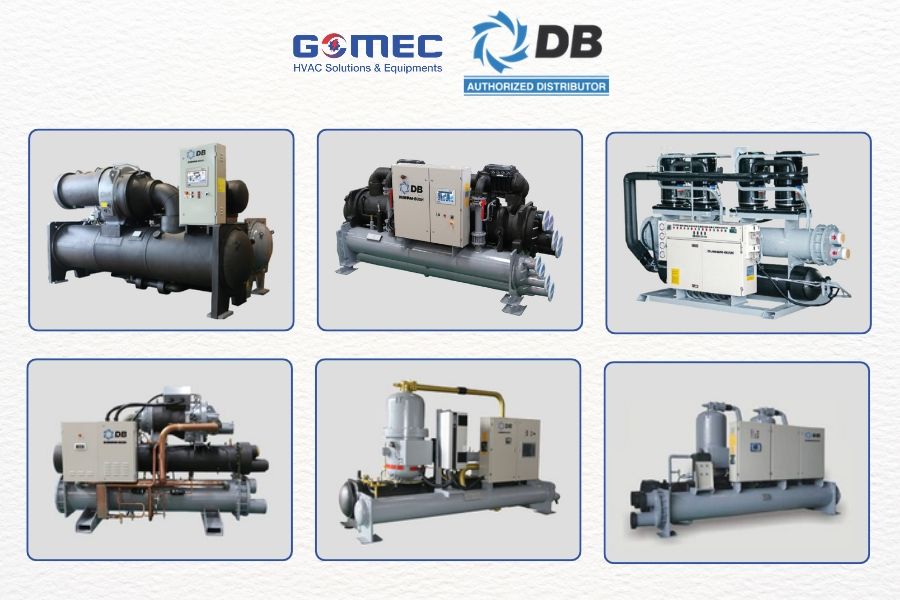
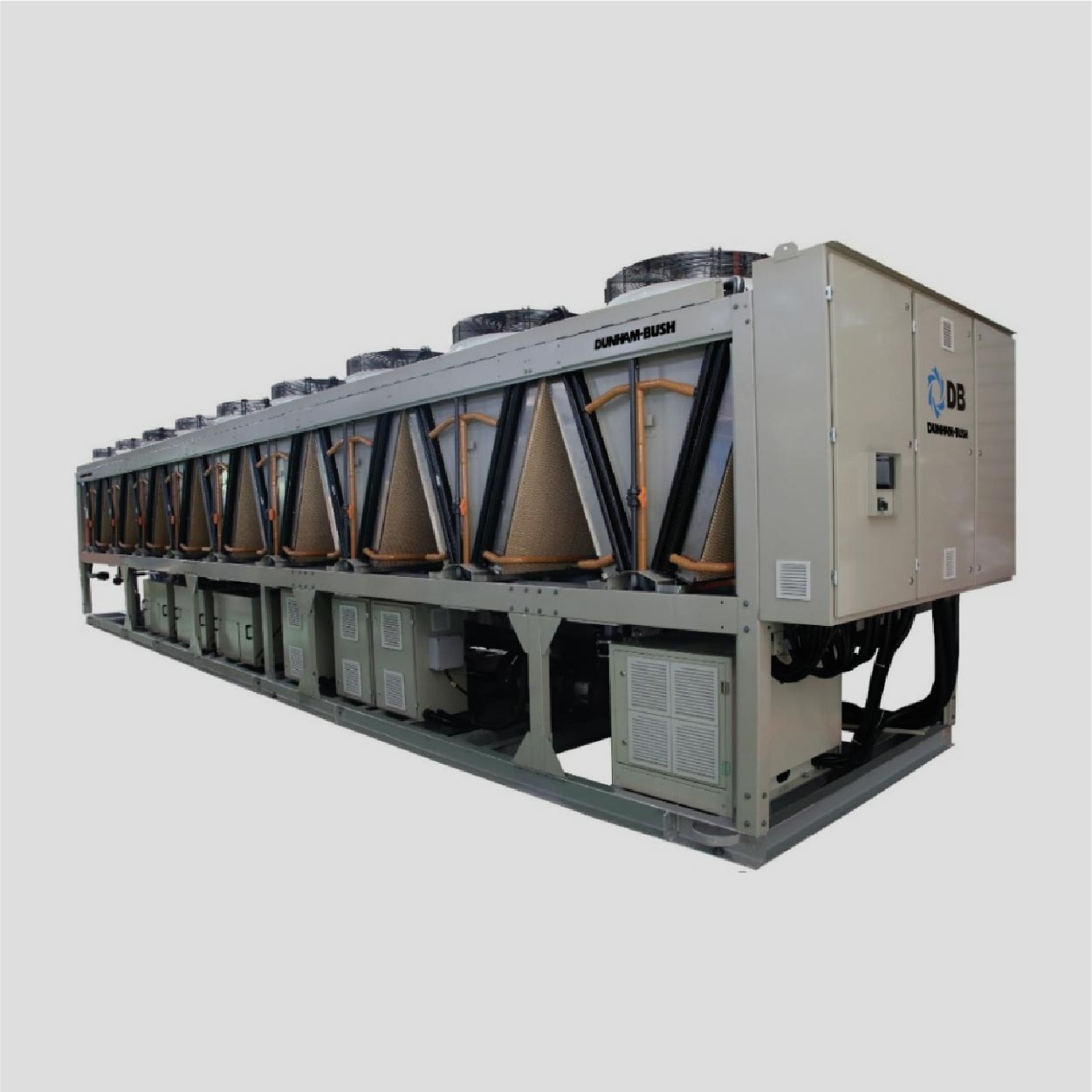
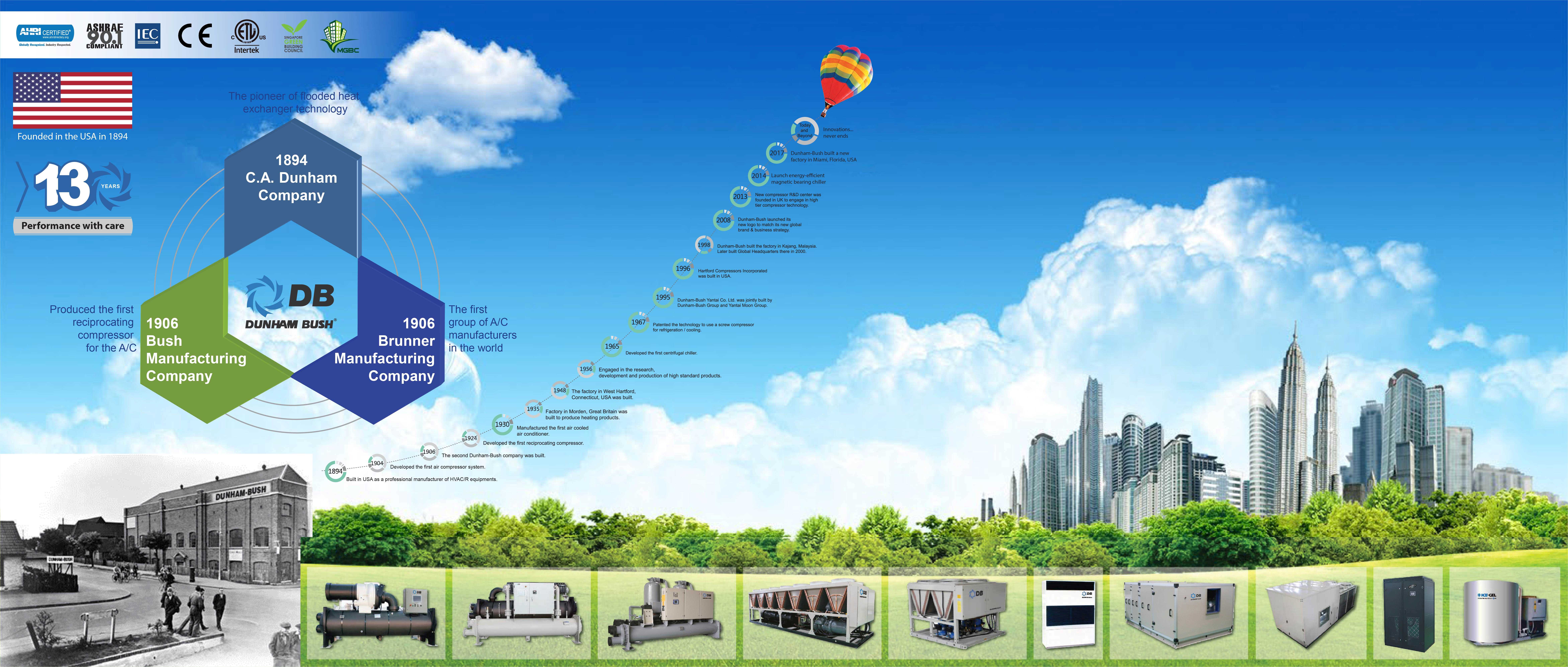
As a global pioneer in HVAC technology with over a century of experience, Dunham-Bush offers advanced water-cooled chiller lineups that meet stringent AHRI standards for efficiency and reliability.
Water-cooled centrifugal chillers
Technical Features: Utilizes high-efficiency centrifugal compressors, optimizing refrigerant flow dynamics to achieve extremely high COP values under both full-load and part-load conditions.
Applications: Suitable for mega-projects, mixed-use complexes, and large-scale data centers requiring 24/7 continuous stability.
Water-cooled magnetic bearing chillers
Technical Features: Applies oil-free magnetic levitation bearing technology, eliminating friction loss, operating ultra-quietly, removing energy losses caused by oil pumps, and extending compressor service life.
Key Benefits: Exceptional energy savings, minimal maintenance costs, compact footprint, and 100% eco-friendliness.
Water-cooled screw chillers
Technical Features: Employs high-efficiency twin-screw compressors with integrated stepless capacity control technology.
Applications: Ideal for industrial manufacturing plants and mid-sized commercial buildings demanding high durability and dynamic adaptation to fluctuating thermal loads.
Key criteria for designing and selecting an efficient water cooled chiller system
To ensure the water-cooled chiller system operates at peak efficiency and maintains long-term durability throughout the project lifecycle, MEP design engineers and contractors should focus on these core factors:
Accurate Cooling Load Calculation: Prevents oversizing, which leads to capital waste and part-load efficiency degradation, or undersizing, which causes system overload.
Cooling Water Quality Management: The cooling tower system requires periodic chemical treatment for scale and bio-fouling to maintain clean heat transfer tube surfaces in the condenser, ensuring high heat transfer coefficients.
BMS Integration: Enables real-time parameter monitoring, automatically resetting water flow rates and setpoint temperatures according to actual building load demand.
Gomec Vietnam – Authorized distributor of authentic Dunham-Bush equipment
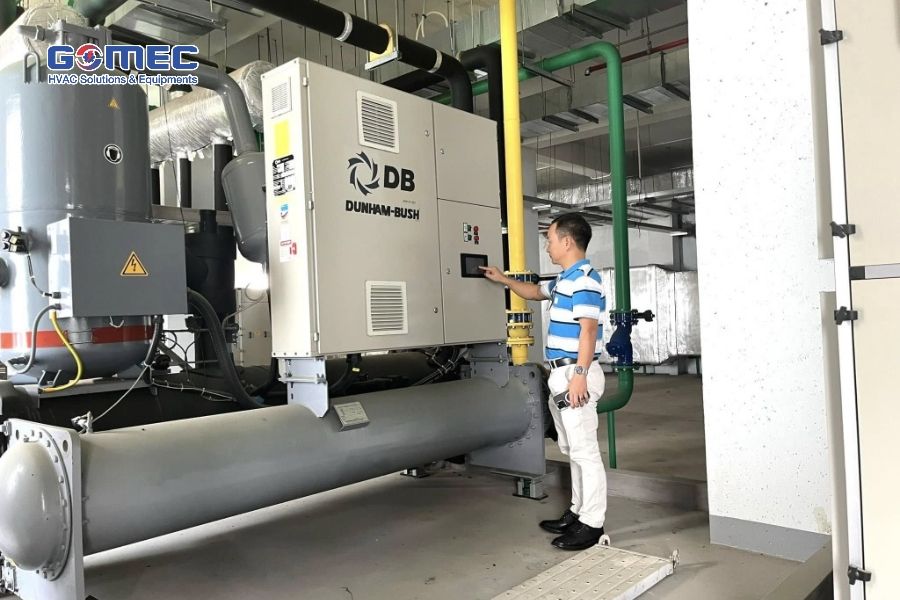
To maximize technical solution efficacy, investing in authentic equipment from a reputable distributor is a prerequisite. In Vietnam, Gomec Vietnam Mechanical and Electrical Joint Stock Company is proud to be the official authorized distributor of central HVAC equipment lines from Dunham-Bush (USA).
100% Authentic Equipment: Comprehensive portfolio of water-cooled chillers, AHUs, FCUs, and auxiliary equipment meeting AHRI standards from Dunham-Bush.
In-Depth Technical Support: Experienced engineering team accompanying client investors from initial design consultation, equipment sizing, to installation and technology handover.
Energy-Saving Solutions: Optimizes operating expenditure (OPEX) while meeting green building standards (LEED, ESG) for commercial and industrial projects.
>> Read more: Key Criteria for Selecting the Right Dunham-Bush Chillers for Your Project
Conclusion
Water-cooled chiller systems serve as the golden key helping modern facilities solve energy challenges, reduce operating costs, and protect the environment. Combining advanced technology from Dunham-Bush (USA) with professional technical consultation from Gomec Vietnam ensures building owners and contractors possess robust, high-efficiency MEP systems.



Related Post

Principle of Plate Heat Exchangers in Industrial Applications


Gomec Vietnam Officially Joins the Business Committee of the Vietnam Society of Refrigeration and Air-Conditioning Engineers

Differences Between AHU and PAU: How To Select The Right Equipment For Your Facility