







GPHE introduction
Contents/ Mục Lục
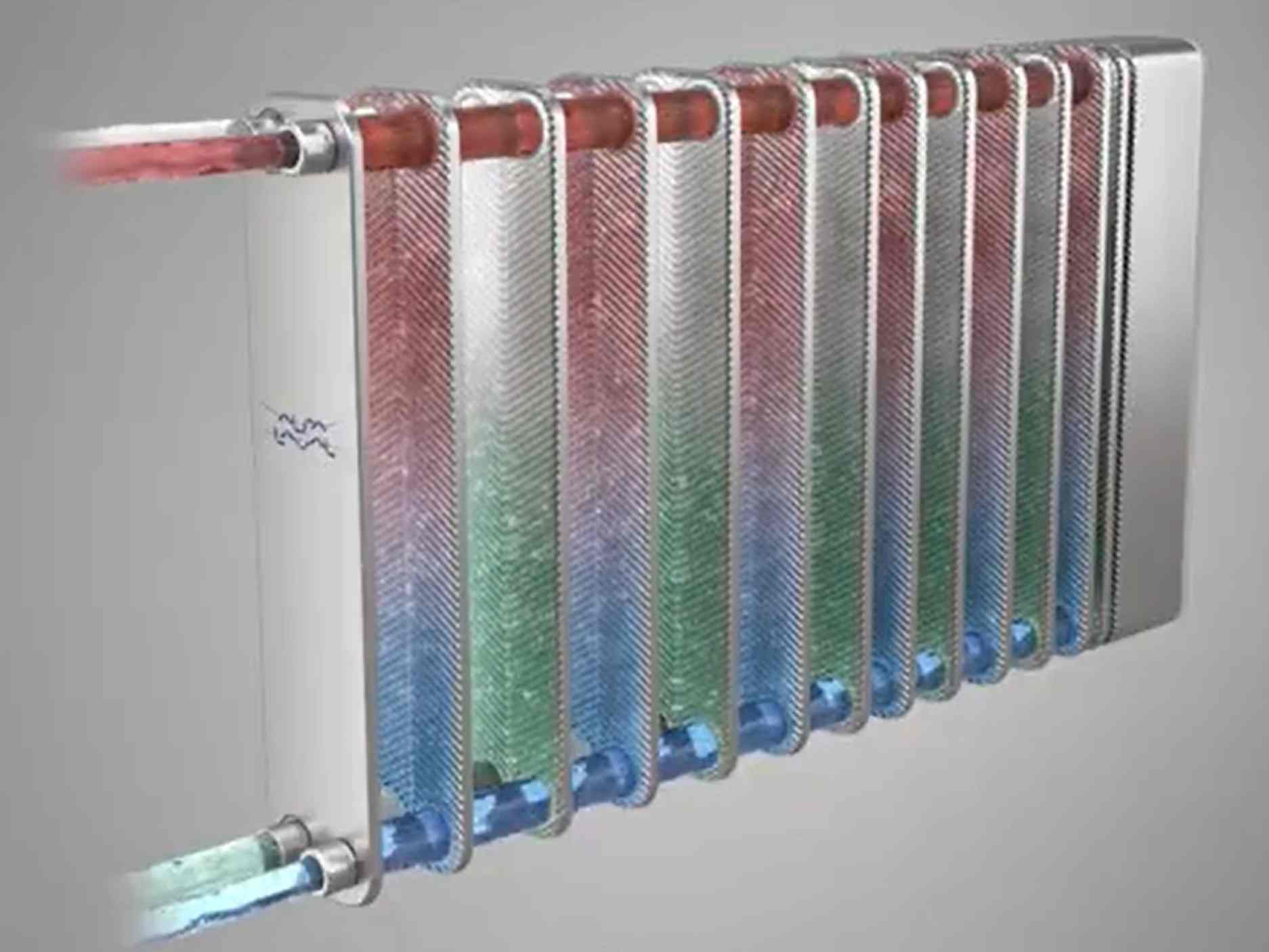
- 1. Construction and working principle of a gasketed plate heat exchanger (GPHE)
- 2. Reasons to buy gasketed plate heat exchangers from the market leader
- 3. Plate and gasket technology
- 4. Features that set new standards
- 5. Types of gasketed plate heat exchangers
- 6. Gasketed plate heat exchangers (GPHE) product lines
- Industrial Line
- Industrial Semi-Welded Line
- WideGap
- Diabon
- AlfaQ
- AlfaCond
- AlfaVap



CurveFlow™
OmegaPort™
FlexFlow™
Offset gasket groove
CurveFlow™
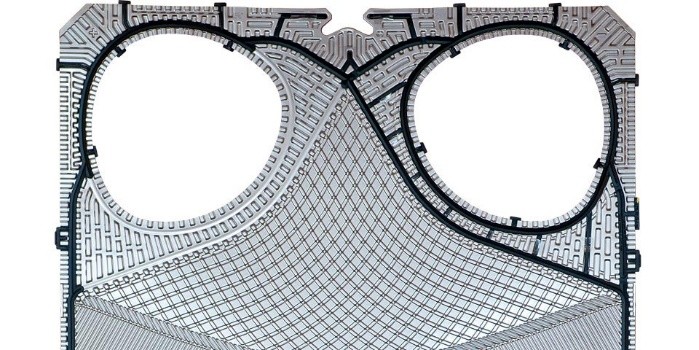
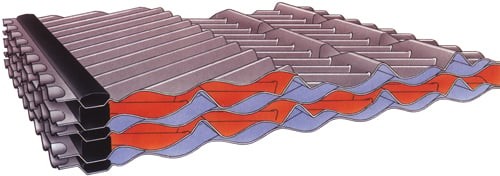
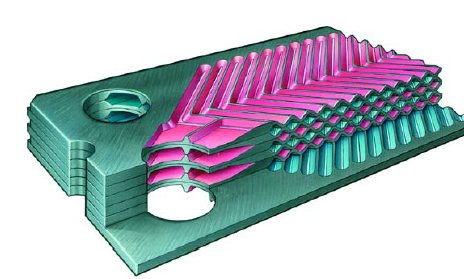
The CurveFlow™ distribution area optimizes the flow of media for better utilization of the whole plate surface. Improving the flow with more even distribution eliminates dead spots, providing higher thermal efficiency with reduced risk of fouling. This in turn means energy savings, lower maintenance costs and less time worrying about unplanned stops.
OmegaPort™
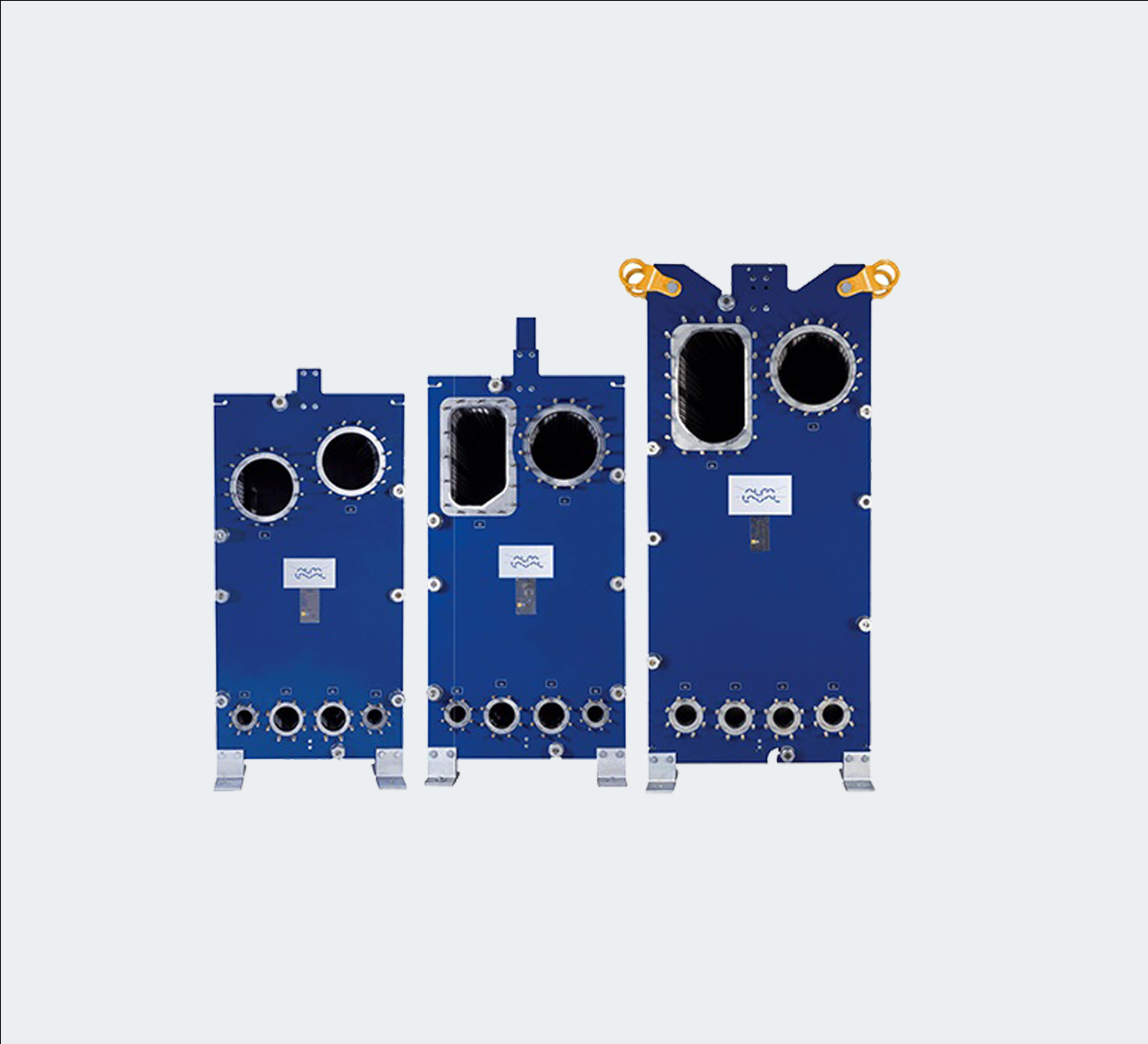
The OmegaPort™ noncircular inlet and outlet offers two ways to save on energy: both higher thermal efficiency and reduced pump costs. That’s because it enhances the flow of media to give increased throughput, lower pressure drop and optimal utilization of the plate surface.
FlexFlow™
The FlexFlow™ plate design improves thermal efficiency and optimizes pressure drop utilization. The asymmetric channels eliminate the compromise between thermal efficiency and pressure drop for duties with different hydraulic loads on the two sides of the heat exchanger. The result is up to 30% higher efficiency along with reduced fouling, for long-term, cost-effective performance.
Offset gasket groove
The next generation of gasketed plate heat exchangers is designed with a gasket groove in a special zig-zag pattern that offers the greatest possible heat transfer area. Better utilization of the whole plate reduces the number of plates required for optimal performance and ensures maximum thermal efficiency for still greater energy savings.
PowerArc™
Five-point alignment
SteerLock™
RefTight™
PowerArc™
The PowerArc™ plate pattern divider is a feature in the bigger plates of Alfa Laval’s next-generation heat exchangers. This design ensures a more rigid plate, preventing plate elongation and securing perfect alignment. As a result, the risk for leaks or damage to the plate is significantly reduced, meaning you can expect longer operation from every plate in the pack. Additionally, the increased rigidity makes handling plates during maintenance a safer and easier process.
Five-point alignment
Alfa Laval’s unique five-point alignment system ensures perfect plate alignment when closing the unit, while simultaneously making it quick and easy to remove plates during maintenance. Excellent plate positioning secures reliable mechanical performance and helps extend the life of your equipment.
SteerLock™
The SteerLock™ plate alignment ensures reliable plate positioning and easy service. It also secures the plate pack when exposed to pressure and temperature during operation. If the unit is disassembled for maintenance, the smart design simplifies the picking of plates when they are about to be hung back.
RefTight™
The RefTight™ sealing system enables enhanced, long-term performance in applications with high pressures and temperatures. The weld is positioned outside the separate ring gasket groove, ensuring reliable sealing as well as extended gasket lifetime and prolonged service intervals.
ClipGrip™
T-bar roller
Compact frame
Bearing boxes
ClipGrip™
ClipGrip™ gaskets offers superior fastening to the plate. Not only do the next-generation gaskets stay in place better than before, but they are also easier to mount in the first place. The unique design prevents snaking of plates at closing and the tangling of new gasket sets. Maintenance of the heat exchanger goes faster, plates and gaskets last longer, and you save money as a result.
T-bar roller
In the next-generation plate heat exchanger, Alfa Laval has replaced the traditional roller function built on top of the carrying bar with a T-bar roller. The pressure plate roller is mounted under the carrying bar, decreasing the height of the heat exchanger and making maintenance simpler and more cost-effective. This design also protects the roller from falling dust and debris, which prevents jamming, minimizes the potential for damage to the frame and ensures easy opening and closing of the unit when required.
Compact frame
The Compact frame feature offers more capacity in a smaller footprint. The smart guiding bar enables a maximum number of plates or cassettes in the frame while keeping the service area requirements down to a minimum. The design enables a faster and safer service which minimizes downtime and reduces maintenance costs.
Bearing boxes
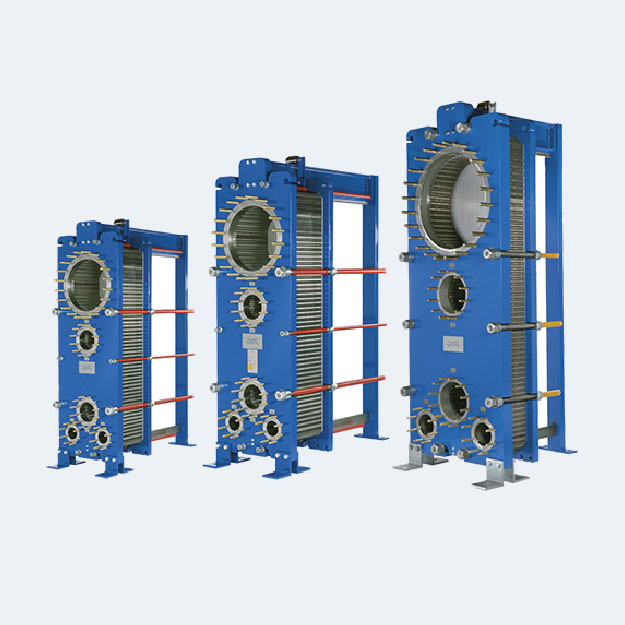
Alfa Laval’s large and medium model gasketed plate heat exchangers employ tightening bolts with bearing boxes to reduce friction when opening and retightening the unit. This makes it possible for one person to easily and safely service the heat exchanger without the need for special tools. The bearing box thus offers significant advantages over competing solutions designed with a simple nut and washer, where maintenance is laborious, time-consuming and potentially hazardous.
For standard duties – heating, cooling, heat recovery, evaporation and condensation
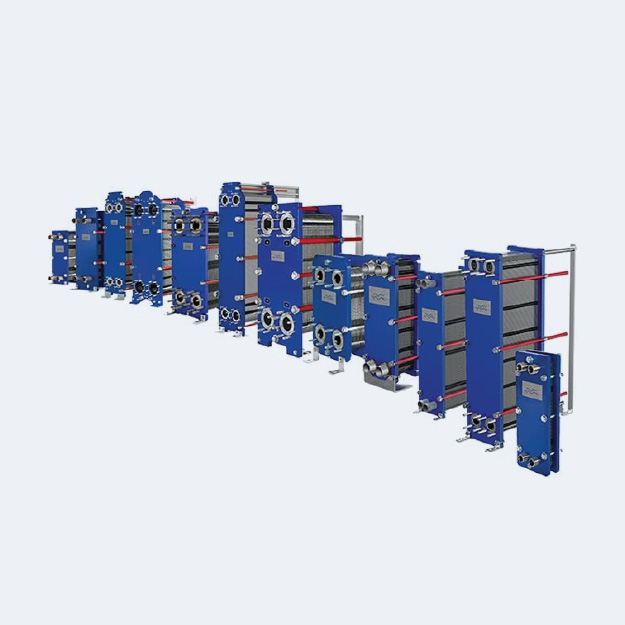
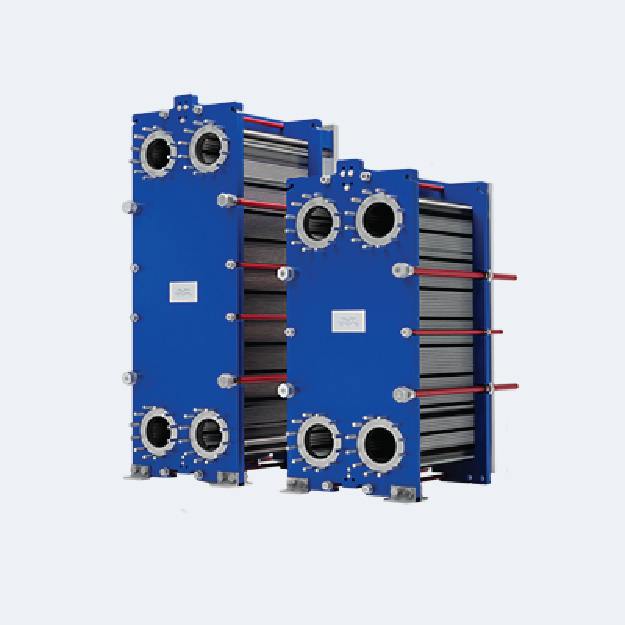
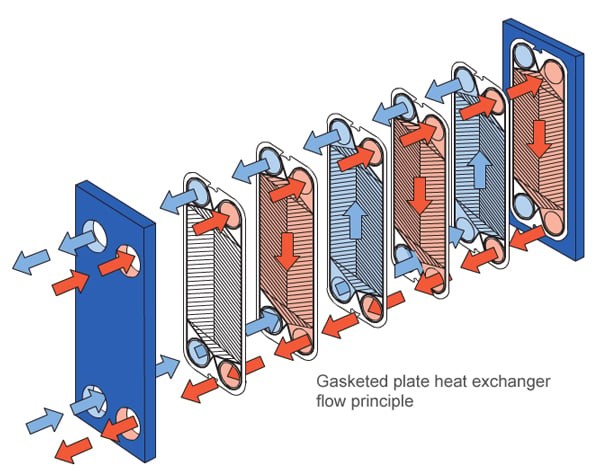
Industrial gasketed plate heat exchanger’s versatility allows it to be designed and configured for applications ranging from relatively simple duties with low requirements to very demanding duties with the highest requirements on both performance and documentation. The models are used for heating, cooling, heat recovery, condensation, and evaporation.
Typical applications:
- HVAC
- Refrigeration
- Engine cooling
- Dairy and food
- Chemical processing
- Oil production
- Power generation
- …and more
>> Learn more about Industrial gasketed plate heat exchangers
AHRI certified for HVAC applications
The AlfaQ range is certified according to the AHRI Liquid to Liquid Heat Exchangers (LLHE) Certification Program which ensures thermal performance according to manufacturers’ published specifications in the HVAC market.
Typical HVAC applications:
- District cooling substations
- Ice storage systems
- Data centers
- Free cooling systems

>> Learn more about AlfaQ AHRI certified gasketed plate heat exchangers
For refrigeration with aggressive media
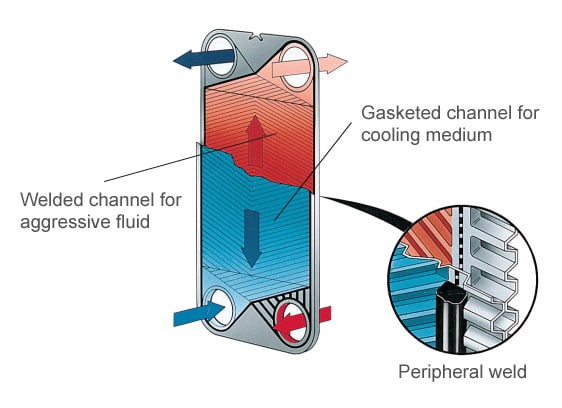
Use Semi-welded gasketed plate heat exchangers as evaporators and condensers for refrigerations systems, when gaskets are not suitable for one of the process media. Semi-welded heat exchangers alternate welded channels and traditional gasketed channels and can also take a higher design pressure compared to fully gasketed plate heat exchangers.
Typical applications:
- Dairy, brewery and vineyard production
- Marine
- Fishing vessels and fish processing
- Slaughterhouses
- Chemical and pharmaceutical industries
- Ice manufacturing, ice-skating rinks
- Cold and frozen storage
- Food retail outlets
> Learn more about Industrial semi-welded GPHEs
When you have fluids with particles
WideGap gasketed plate heat exchangers are designed for fibrous fluids and for fluids containing coarse particles. The wide gaps between plates allow fibers and particles to easily pass through the heat exchanger with minimum clogging.
Typical applications:
- Sugar
- Bioethanol
- Pulp and paper
- Petrochemicals
- Condensers for heat recovery
>> Learn more about WideGap gasketed plate heat exchangers
Evaporators – when concentration and viscosity of media are high
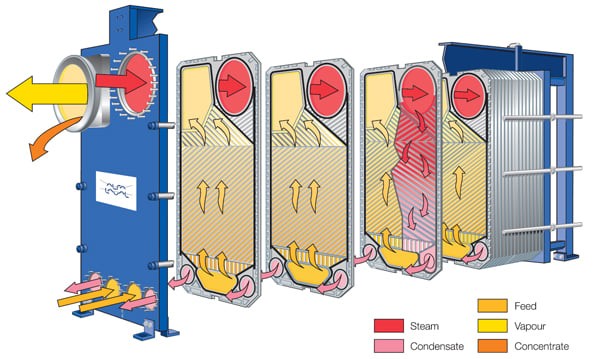
AlfaVap semi-welded heat exchangers are rising film plate evaporators and are suitable when concentration and viscosity of media are high.
AlfaVap’s advantage is they work also when the temperature differential between the hot and cold fluids approaches as low as 4.5°F meaning that lower grade steam and more effects in series can be use in an evaporation system compared to the shell-and-tube systems.
Typical applications:
- Sugar refinery evaporation systems
- Sweeteners evaporation systems
- Bioethanol and caustic evaporation
- Thermosiphon reboiler
>> Learn more about AlfaVap plate evaporators
Condensing of vapor under vacuum
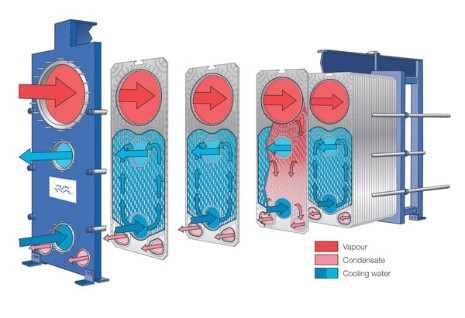
AlfaCond plate condensers are specifically designed for condensing of vapor under vacuum. They’re an alternative to direct condensers when condensate recovery is the goal and when there are space constraints. Non-condensables are removed from the condensate outlet pipe and led to the vacuum system.
Typical applications:
- Evaporation systems
- Ethanol condensers in bioethanol plants
- Pan vapor condensers in sugar refineries
- Turbine condensers in small power plants
>> Learn more about AlfaCond plate condensers
For highly corrosive media
Diabon plate-and-frame heat exchangers are used for highly corrosive media, combining high-efficiency heat transfer benefits with the exceptional corrosion resistance of graphite material.
Diabon is a dense, synthetic resin-impregnated high quality graphite with a fine and evenly distributed pore structure, and can be used with corrosive media up to 390°F.
Ideal for handling highly corrosive fluids such as:
- Hydrochloric acid and gas in all concentrations
- Sulphuric acid up to 90%
- Hydrofluoric acid up to 60%
- All concentrations of phosphoric acid
- Pickling acids in surface treatment plants
- Electrolytes used in the mining industry
- Mixed acids
- chlorinated hydrocarbons
- catalysts such as aluminium chloride
>> Learn more about Diabon plate heat exchangers